Quick answer: A static QR code has its information permanently embedded and can never be changed once created, while a dynamic QR code points to a short redirect link that you can update anytime — even after the code has already been printed or shared. If you might ever need to change where your QR code leads, use a dynamic one. If the content will never change, a static one is simpler and works just as well.
That’s the short version. But if you’re about to create a QR code for your business, product, or event, it’s worth actually understanding the difference — because picking the wrong type is one of the most common (and most annoying) mistakes people make.
What Is a Static QR Code?
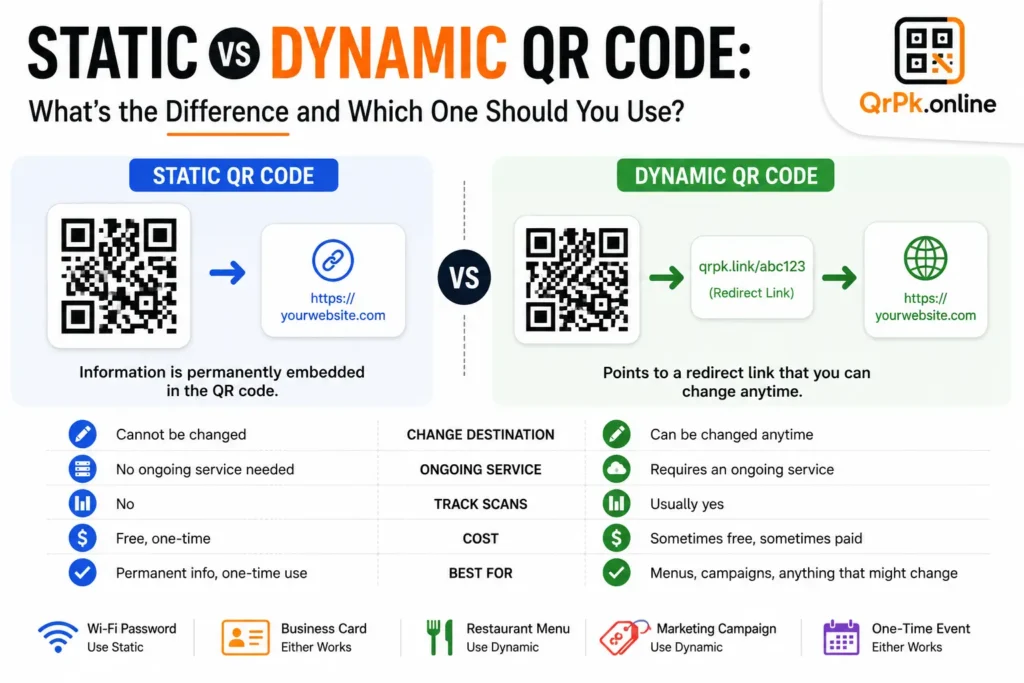
A static QR code has all its data baked directly into the pattern of black-and-white squares itself. If it links to a website, that exact URL is permanently part of the code. If it holds Wi-Fi details, contact info, or plain text, that information is fixed the moment the code is generated.
This means static QR codes are:
- Free forever — no subscription or hosting needed, since there’s no server involved in redirecting anyone anywhere.
- Permanent — once printed, the destination can never be changed.
- Simple and reliable — no dependency on a third-party service staying online to keep working.
The tradeoff is exactly what you’d expect: if you make a typo, your business moves, your offer changes, or your menu gets updated, the QR code you already printed is now pointing to outdated information — permanently.
What Is a Dynamic QR Code?
A dynamic QR code doesn’t store your actual destination directly. Instead, it stores a short redirect link, similar to how a link shortener works. When someone scans it, they’re sent to that short link first, which then instantly forwards them to whatever destination you’ve set — and because you control that redirect, you can change where it points at any time, without changing the QR code itself.
This makes dynamic QR codes useful when:
- You’re not 100% sure the destination link is final yet.
- You’re running a limited-time promotion and want to reuse the same printed code later for something else.
- You want to track how many people scanned the code, and when.
- You’ve already printed the code on packaging, signage, or business cards and might need flexibility later.
The tradeoff here is that dynamic QR codes typically rely on an ongoing service to handle the redirect — so if that service ever shuts down or the link isn’t renewed, the QR code stops working, even though the physical code still looks exactly the same.
Static vs Dynamic: A Side-by-Side Breakdown
| Static QR Code | Dynamic QR Code | |
|---|---|---|
| Can the destination be changed later? | No | Yes |
| Does it require an ongoing service? | No | Yes |
| Can you track scans? | No | Usually yes |
| Cost | Free, one-time | Sometimes free, sometimes subscription-based |
| Best for | Permanent info (Wi-Fi password, fixed contact card, one-time event) | Menus, marketing campaigns, anything that might change |
Real Examples: Which One Fits Your Situation?
Printing a QR code on a T-shirt or product that will never be reprinted → Static. There’s no need for tracking or flexibility, and you don’t want your code to stop working someday if a redirect service goes down.
A restaurant menu QR code on table tents → Dynamic is usually smarter. Menus change seasonally, and reprinting table tents every time a price changes is a hassle you can avoid.
A Wi-Fi QR code for your home or office router → Static. Wi-Fi credentials don’t need tracking, and you want something that works forever without depending on an external service.
A QR code on a billboard, flyer, or one-time event ticket promoting a specific offer → Dynamic, especially if you want to know how many people actually scanned it — a good way to measure whether the campaign is working.
A QR code linking to your portfolio or business card details → Either works, but dynamic gives you the safety net of updating your info later without reprinting cards.
How to Decide in 10 Seconds
Ask yourself one question: “Is there any chance I’ll need to change this link later?”
- If yes → go dynamic.
- If no, and the information is permanent → go static, and skip the extra complexity.
Most people overthink this decision. In reality, unless you specifically need scan tracking or expect the destination to change, a simple static QR code does the job perfectly well — and it’s the option available for free, instantly, with no ongoing dependency.
You can generate a free static QR code for a link, text, Wi-Fi network, or contact card directly at qrpk.online in a few seconds, no sign-up required.
Also Read > Digital Business Cards vs Paper Ones: Why More People Are Switching to QR Codes
Frequently Asked Questions
Can a static QR code expire?
No. A static QR code works for as long as the destination it points to (like a website) remains active. The code itself never expires.
Is a dynamic QR code better than a static one?
Not necessarily “better” — it depends on your use case. Dynamic codes offer flexibility and tracking, but static codes are simpler, free, and don’t depend on an external service staying online.
How can I tell if a QR code is static or dynamic just by looking at it?
You generally can’t tell visually. The difference is in how the code was generated and what kind of link it stores — a dynamic code usually redirects through a shortened URL, while a static one encodes the final destination directly.
Do dynamic QR codes cost money?
Some services charge for dynamic QR codes, especially with advanced tracking features, while others offer basic dynamic functionality for free. Static QR codes are almost always free since they don’t require ongoing hosting.
Final Thought
The static-vs-dynamic decision isn’t complicated once you know what each one actually does. Most everyday needs — a Wi-Fi code, a business card, a one-time flyer — are perfectly served by a free static QR code. Save dynamic codes for situations where flexibility or tracking genuinely matters, like an evolving marketing campaign or a menu you know you’ll update.
- How to Create a QR Code for JazzCash, Easypaisa, or Bank Transfer Payments
- How to Create a WhatsApp QR Code (Click-to-Chat, No Coding Needed)
- How to Create a QR Code Menu for Your Restaurant (Free, Step-by-Step)
- How to Add a Logo to Your QR Code (Without Breaking the Scan)
- Are QR Codes Safe? How to Spot a Fake or Malicious QR Code
- How to Reduce Image Size for Email, WhatsApp, or Website Uploads (Without Ruining Quality)
- How to Make a QR Code for Your Instagram Profile (Free, in Under a Minute)
- Static vs Dynamic QR Code: What’s the Difference and Which One Should You Use?